News
Annual writing retreat brings SLU Aqua’s PhD students together
Published: 25 May 2026

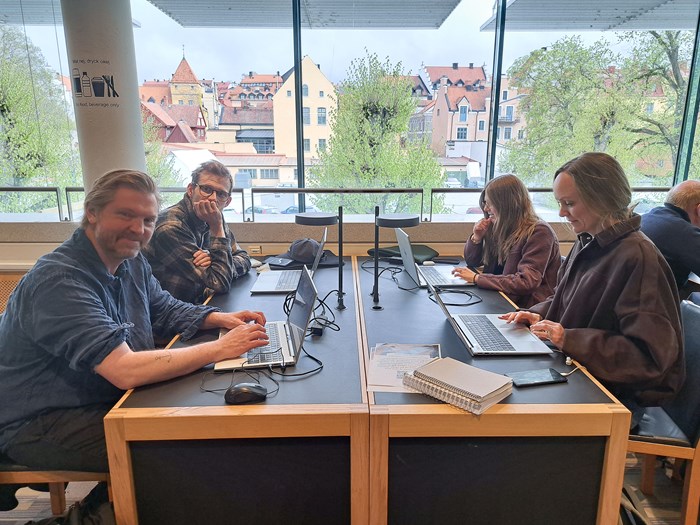
Once or twice a year the PhD students at SLU Aqua gather for their annual writing retreat. This year the students gathered on Gotland for a chance to focus on writing, exchange ideas, discuss science, and strengthen connections across the country.
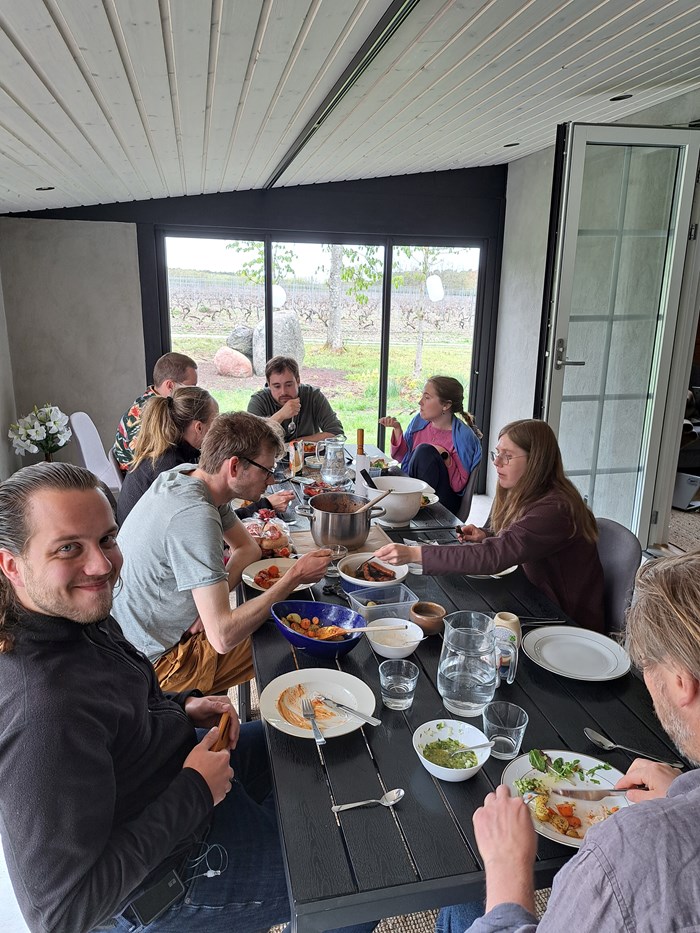
SLU Aqua’s PhD students are spread out across the country and these in-person writing retreats allow them to connect more with one another, both at a personal and professional level. The focus is writing, but they also take time to share their own projects, exchange feedback and discuss science. They also support one another if any issues arise or if any of them are having a difficult time with work. In these retreats the students live and cook together and have a schedule to follow, building team-work and cooperation.
Let’s hear more from our PhD students Ilaria Perriu, Claire Ract, Duncan Philpott and Joni Riihimaa about how they experienced this year’s writing retreat.
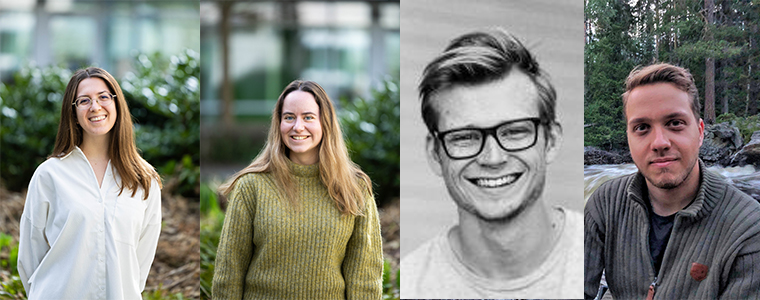
From the left: Ilaria Perriu, Claire Ract, Duncan Philpott & Joni Riihimaa.
What do you enjoy the most with the writing retreats?
Ilaria:
I enjoy being together and having the opportunity to meet the other PhDs in person.
Claire:
I think, like Ilaria said, being able to gather, just for a few days once or twice a year, is really nice! I also love that we must plan an activity every time, it’s usually so much fun! This time, the activity was visiting Stora Karlsö, and it was truly amazing!
Duncan:
Given the fragmented nature of the aqua PhD students, it is the only opportunity outside of a PhD defence (which often carries responsibilities for many of the individuals) to meet each other. Through these meetings, we can discuss our experiences as a student whilst sharing knowledge amongst ourselves. Sölab does not feel like a university in day-to-day life, and it is often easy to forget that you are a PhD student attending university!
Joni:
The social contact with other doctoral students. We are a relatively small group of people geographically dispersed in three or more different locations. Being physically in the same location allows interaction with others in ways different from, for instance, distance meetings. The same location allows for communication with a lower threshold.
How do you work to help and support one another within the group?
Claire:
Besides the help and support we get for any issues we might have in our research topic, I think the mental support is really important. We can discuss with PhD students close to the end of their PhD, and they give us advice on how to deal with stress, for instance or how to maintain a good work versus personal life balance along the PhD. For me, who is a bit struggling with that, I find it really relevant!
Ilaria:
During the writing retreats we are always open and available for one another in giving feedback on writing, helping troubleshoot issues related to the project, but also in listening if someone is stressed or needs to talk things through.
Duncan:
There is a natural direction of knowledge transfer from the more experienced students through to the newer students, while new students offer novel perspectives on various projects of the group. The atmosphere quickly makes it clear that there is no such thing as a silly question, and it is extremely motivating and inspiring to see what the other students are achieving.
Joni:
Interacting with other doctoral students is essential for the working environment. It is of high importance to be able to share thoughts, both positive and negative, about life as a doctoral student. In addition, it is very useful to be able to discuss research, also outside of your own research field, and in other ways share competence with others. I have learned a lot from my doctoral student colleagues, and I have received support that I am very thankful for. Our department is doing an exemplary environment work when supporting the interaction with other doctoral students with these regular writing retreats.
Do you have any special memories from this trip that you want to share?
Claire:
I think the visit to Stora Karlsö was magical. The weather was not very good, but it brought this feeling of mystery to our visit, and being able to see the guillemots from so close was a wonderful experience! Also, the guides on the island were all very dedicated and full of knowledge!
Ilaria:
I really enjoyed Stora Karlsö. It was amazing to go inside the artificial cliff and being able to look at the guillemots from close. The place was also very beautiful.
Duncan:
Stora Karlsö was an incredible destination. I wouldn’t have said that I have a big interest in sea birds; however, this trip changed that, and it was fascinating to see the research facilities and witness thriving Swedish nature.
Joni:
The trip to Stora Karlsö. We saw nesting common guillemots from a close distance. The nature of Stora Karlsö itself is also amazing. I would also like to highlight the PhD games, where we tested our physical, mental and group working capabilities. The results from this game suggest that our department was really successful in hiring all of us – the level of the games was very high. The PhD-games was organised for the first time during this writing retreat. The meaning is to make this a tradition.
Anything else you want to share?
Claire:
The PhD students in this group are becoming my closest friends, and they are a great source of support and motivation for me every day! I really enjoy the writing times when we can all get together!
Ilaria:
I am grateful for this group. My time as a PhD student has been great thanks to the people in it. Even though we are spread out, we can always count on each other and feel the support!
Duncan:
Despite starting my PhD in 2023, this was my first complete writing retreat attendance, and the experience was excellent!
Joni:
The doctoral student group has brought lifelong friends into my life and expanded my network of other scientists.
-
1/4
-
2/4
-
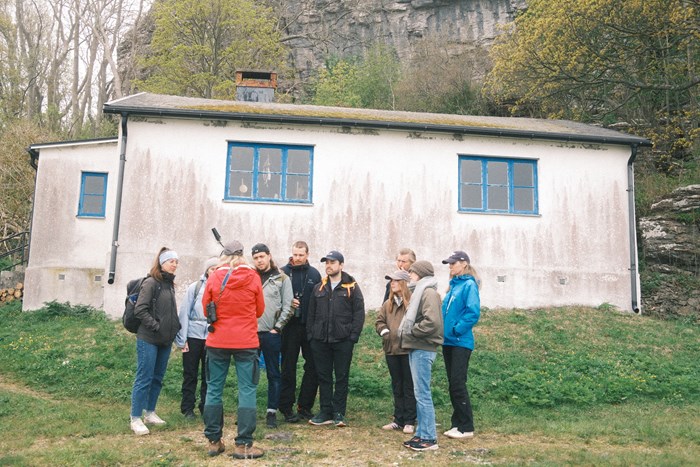
Guided tour on Stora Karlsö. Photo: Duncan Philpott.
3/4
-
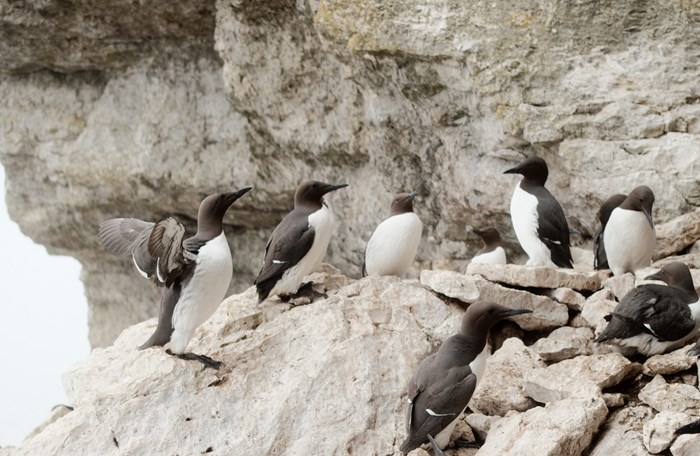
Common guillemots. Photo: Duncan Philpott.
4/4