News
Big success for SLU Aqua in Formas’ open call for research projects 2025
Published: 22 April 2026
Congratulations to Josefin Sundin, Elin Dahlgren and María‑Eugenia López, all of whom have been awarded research funding from Formas’ Explore call.
Explore is Formas’ largest funding call, aimed at promoting scientific breakthroughs for a sustainable future. In total, 85 research projects share SEK 512 million, of which three projects are led by researchers at SLU Aqua and the Institute of Freshwater Research.
Below, the project leaders describe their funded projects in more detail.
STEEL - Restocking, the rescue or demise of Anguillid eels?
Project leader: Josefin Sundin
Granted amount: 6 000 000 SEK
In this project, we will evaluate the effects of stocking European eel. Eel stocking has been carried out for a long time and is still practiced today in many countries, including Sweden. While this method increases eel abundance locally, its effects on the overall population are highly uncertain. Since eels currently cannot be produced in aquaculture, stocking relies on translocating wild glass eels from one area to another. Whether this approach has a positive effect on the stock as a whole therefore remains unknown.
The project will combine laboratory and field experiments with analyses of long-term datasets available at SLU Aqua. We will also compile the current state of knowledge based on published literature on the effects of glass eel stocking for European, American, and Japanese eels. As part of the project, we will recruit a PhD student, and together with them the project will be carried out by myself (Josefin) and Philip Jacobson at SLU Aqua, Fredrik Jutfelt at the University of Gothenburg, and Anders Nilsson at Lund University.
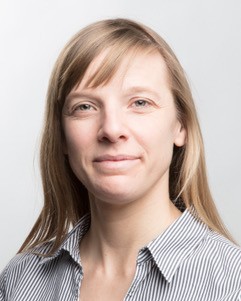
Josefin Sundin, researcher at the Institute of Freshwater research.
Toxic Tides - Algal toxins, fish health, and ecosystem impacts in the Baltic Sea
Project leader: Elin Dahlgren
Granted amount: 6 000 000 SEK
In this project, we will investigate how algal toxins affect fish health and populations in the Baltic Sea, with a particular focus on perch. Algal toxins are a hidden and still relatively unexplored driver in coastal ecosystems, despite their potential importance for fish health and reproduction.
The project will combine field studies, experiments, and modelling to understand how these effects arise and how they can scale up to the population level. A PhD student will be recruited for the project and will conduct the work together with me (Elin), Caroline Ek and Ulf Bergström at SLU Aqua, and Malin Olofsson at the Department of Aquatic Sciences and Assessment.
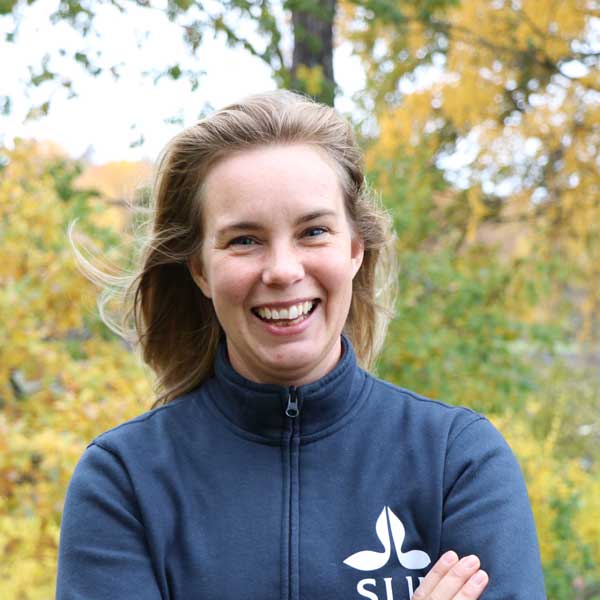
Elin Dahlgren, researcher at the Institute of Freshwater research.
Genomic Erosion and Conservation of Swedish Wels Catfish: Unlocking Evolutionary Insights from Whole Genome Analyses
Projektledare: María-Eugenia López
Totalt beviljat belopp: 6 000 000 SEK
I’m very grateful for this support from Formas, which gives us the opportunity to carry out this work. Many species are declining, but what often goes unseen is the loss of genetic diversity within populations. By studying Swedish Wels catfish, we want to understand how small, isolated populations change over time and what this means for their survival. The project combines whole-genome data from historical and modern samples with evolutionary modelling to explore these processes and identify ways to support vulnerable populations. The work will be carried out in collaboration with Stefan Palm (SLU Aqua), Nicolas Sussex (Swedish Museum of Natural History), Jacob Höglund (Uppsala University), and Cock van Oosterhout (University of East Anglia).
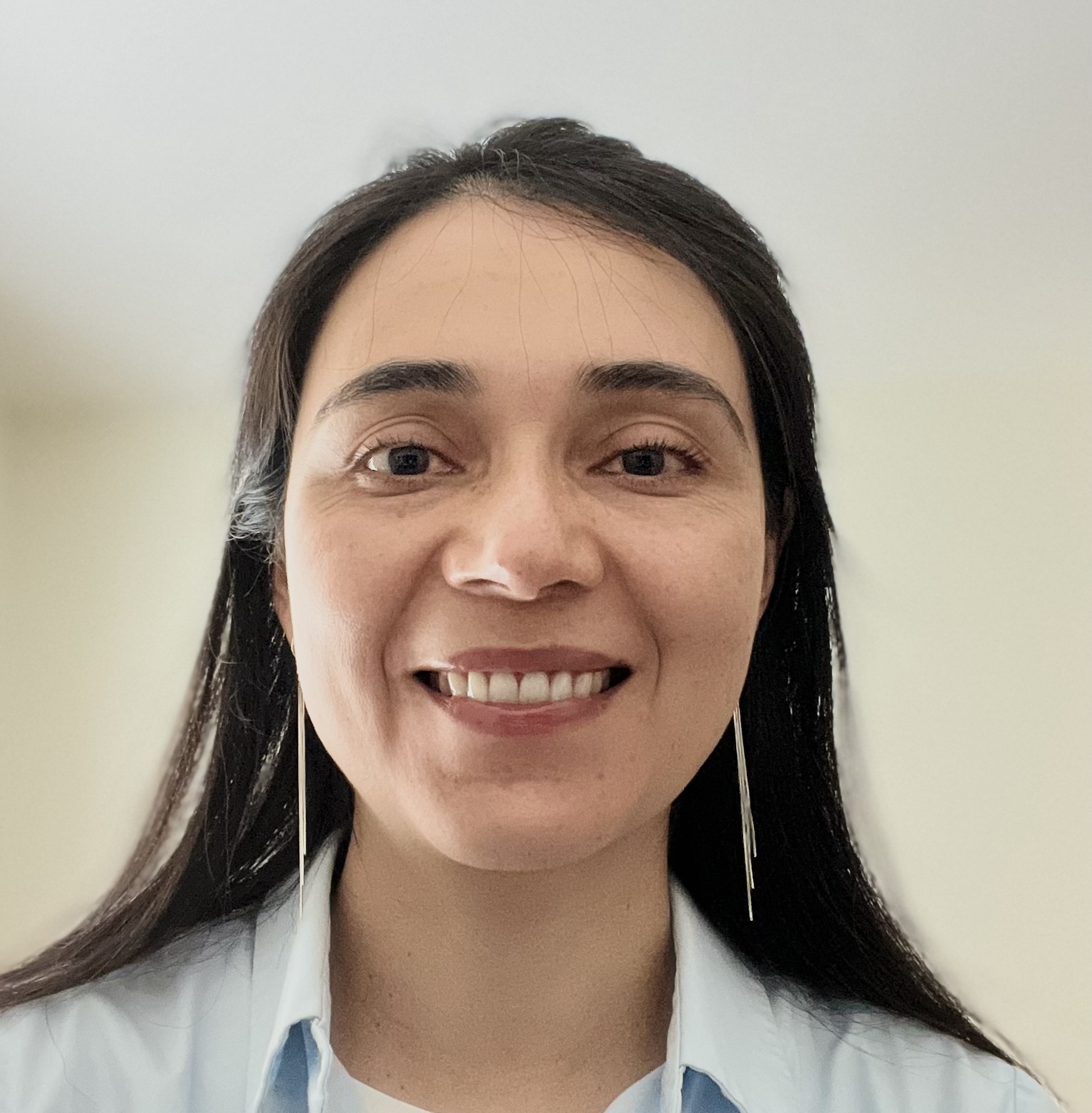
María-Eugenia López, researcher at the Institute of Freshwater research.