We took the opportunity to ask a few questions to Anna Gårdmark, chair of one of SLU Aqua’s coordination groups, the Research Coordination Group, and Edmond Sacre, who has organize this year’s research workshop together with Lachlan Fetterplace and Magnus Huss.
What were the main areas of focus during this year’s research workshop?
Ed: As always, the main focus of these workshops is to foster collaboration among researchers at Aqua by sharing our research with one another and discussing ways to try and improve our research overall. We’re also very spread out among locations at the department, so this workshop is a great chance for the researchers to catch up with each other in person.
What are your main takeaways from these days?
Ed: The main takeaway for me is that research at the department is growing and covering a wide range of fascinating topics in aquatic sciences. We have a lot of new researchers who are very talented and it’s exciting to hear about new projects and ideas coming from Aqua.
Can you tell us more about the Research Coordination Group and what you do?
Anna: SLU Aqua’s Research Coordination Group coordinates proposals and feedback from the three research collegiums across the department’s three divisions. Among other things, we monitor the department’s shared research objectives and organise the annual research workshop. Our role also includes supporting the Head of Department and departmental management by providing advice and background material on research, doctoral education and the research environment. For example, this may involve coordinating material when the department, through the Head of Department, nominates candidates for calls for specific research initiatives where SLU is allowed to submit a limited number of nominations.
The group consists of the three chairs of the research collegiums, the Director of Doctoral Studies, a doctoral student representative, the coordinators of the department’s two research subjects, and professors.
What is the group’s most important mission?
Anna: Our shared mission is to support the development of a strong research environment where we collaborate and learn together, enabling us to conduct excellent research and provide high-quality doctoral education.
Is there anything else you would like to add?
Ed: I think it’s important to highlight that not only has there been exciting developments in research at Aqua, but workshops like this make it clear that we are very lucky to be surrounded by a great bunch of wonderful and motivated people. The research environment is very collaborative, and everyone is always interested to hear about the research of their colleagues and it is inspiring to feel that we are all working towards the common goal of preserving and restoring our oceans, lakes, and rivers.
Anna: Welcome to next year’s research workshop! It is always inspiring to hear about all the exciting research taking place at SLU Aqua, and great fun to meet up and discuss it together!
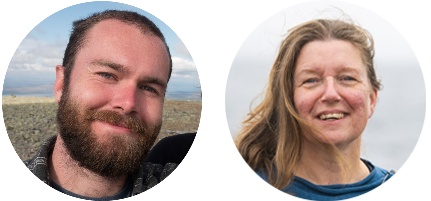
Edmond Sacre and Anna Gårdmark.
A photo gallery from the lunchtime get-together


